HOMAXI LEARNING JOURNAL · TE-004
Kevin’s Home
Motion, light, and sound.
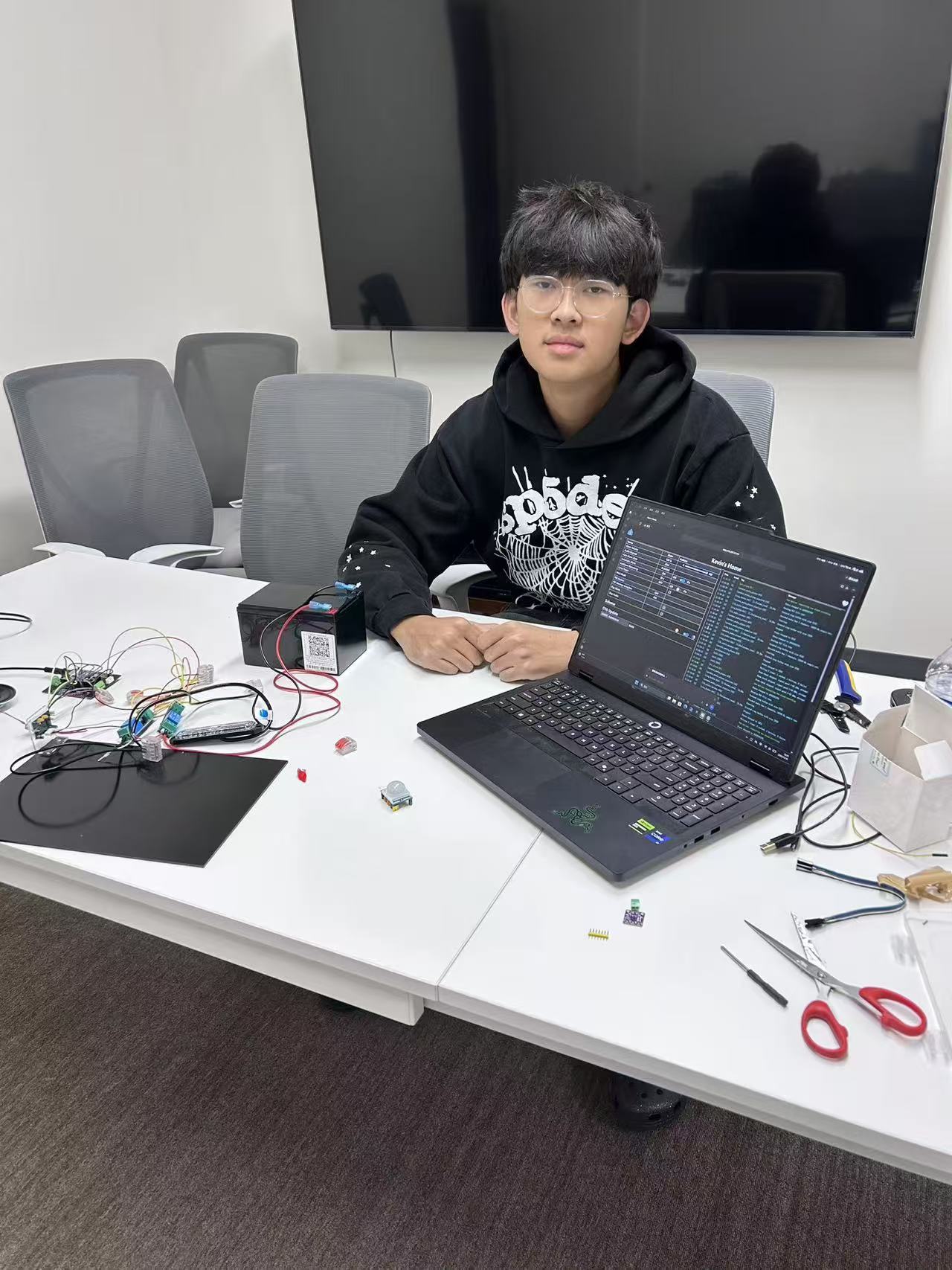
Building on my ESP32 relay project, I explored how a motion sensor, an audio amplifier, and a local control page can work together in a home-alert prototype.
FROM SWITCHING TO SENSING
Giving the controller an input
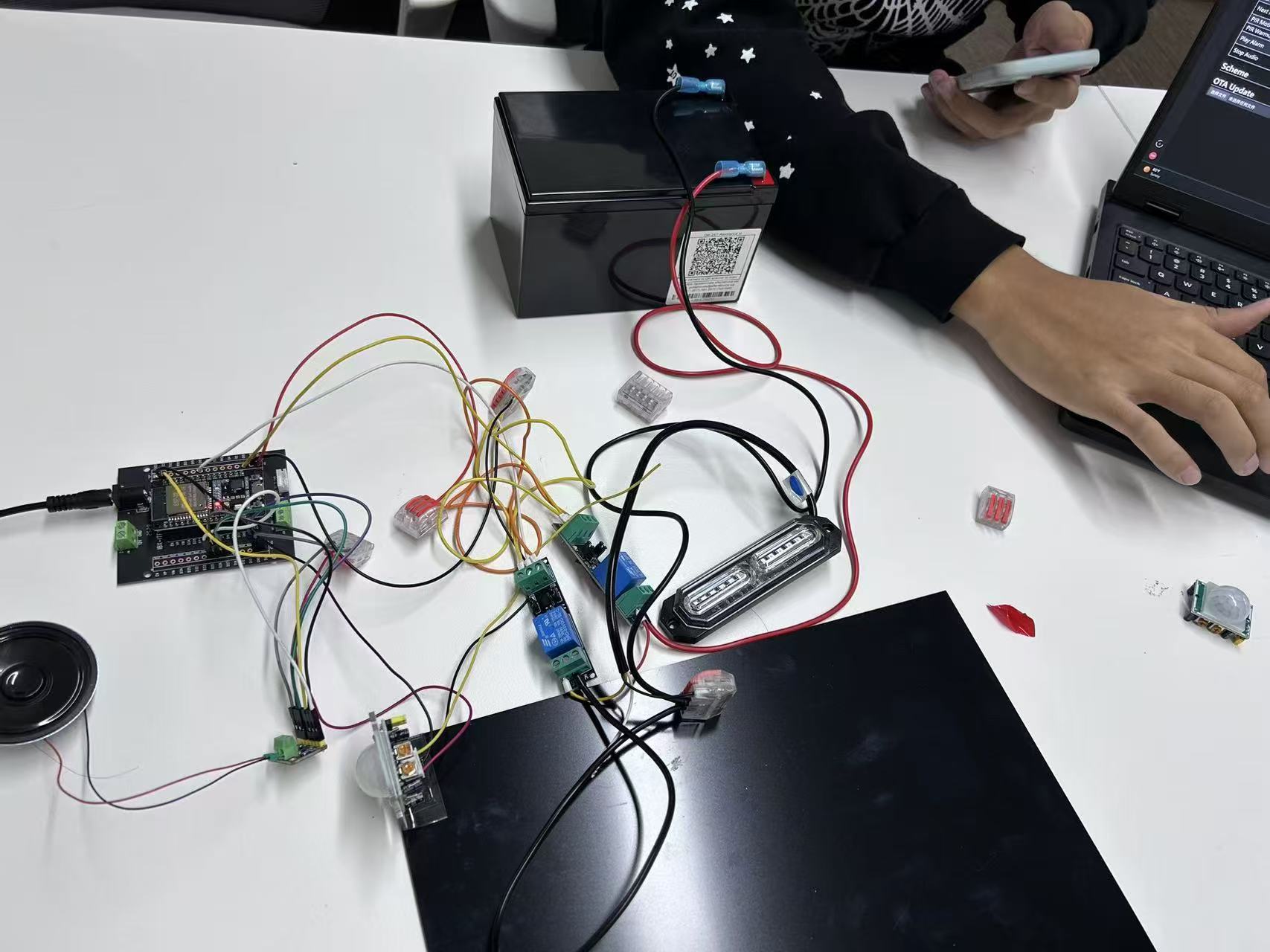
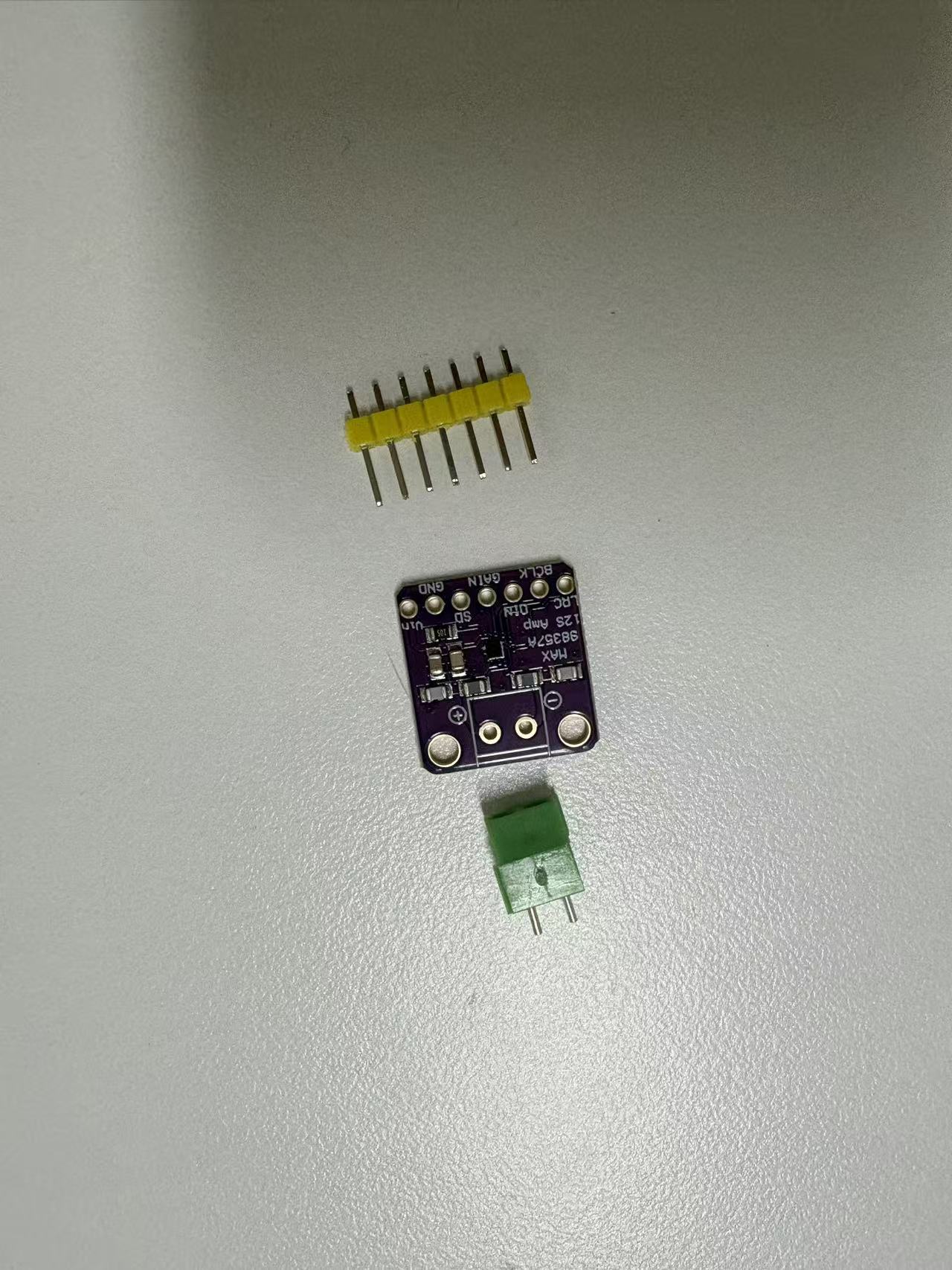
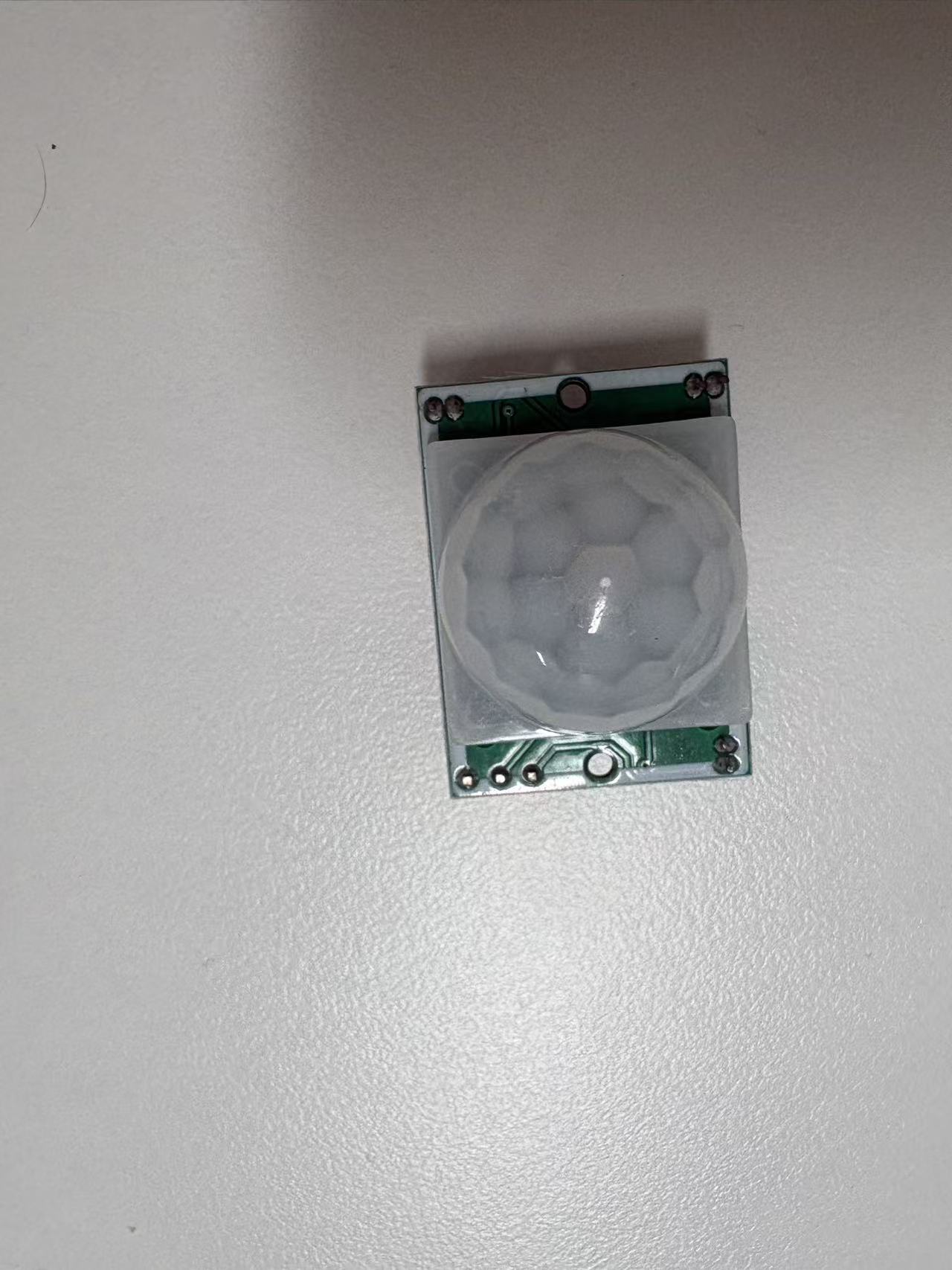
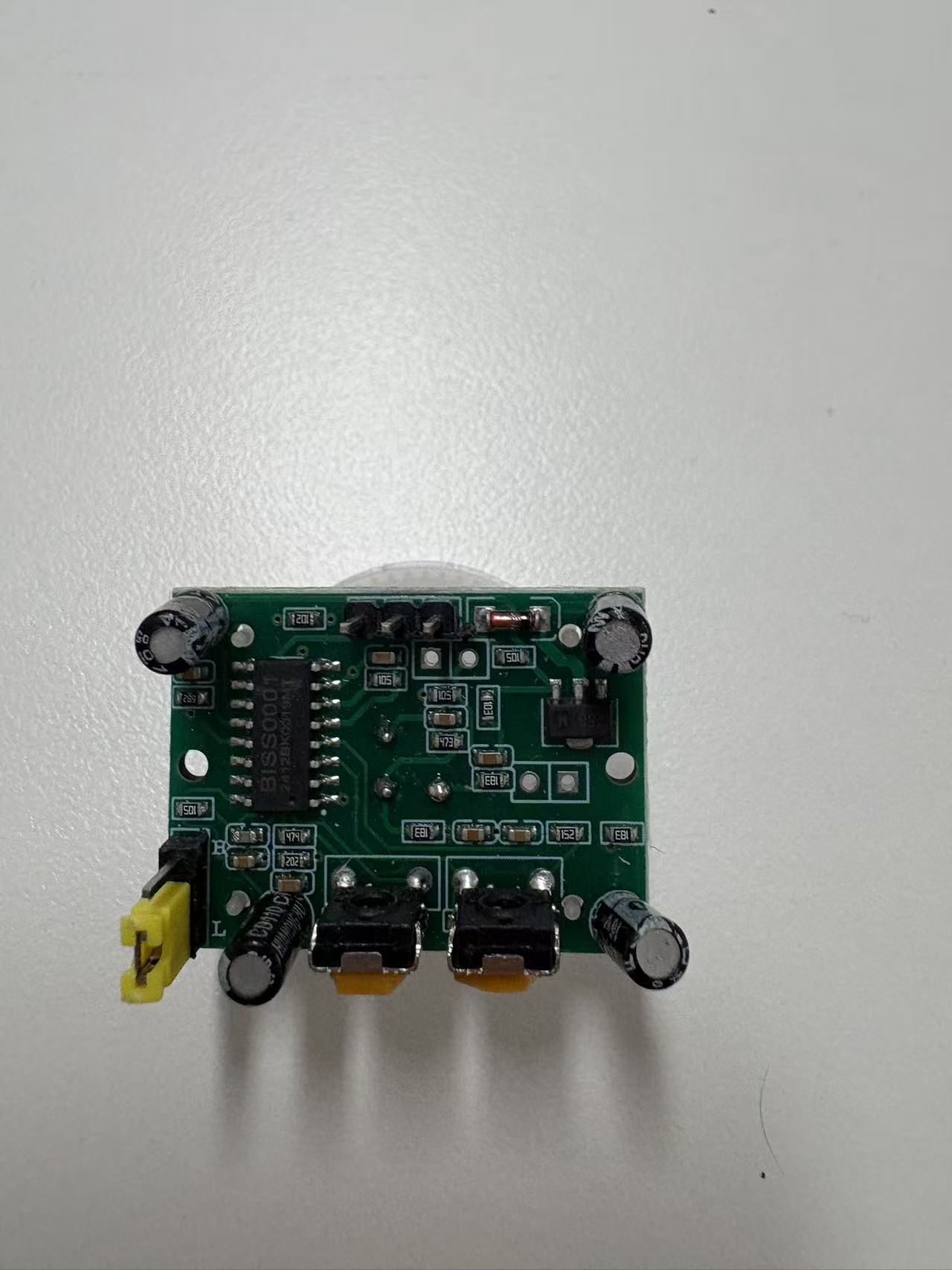
TE-003 introduced commands that switched the strobe light and changed its pattern. TE-004 adds a PIR motion sensor as an input, plus an I2S amplifier and speaker for audio output. The photos show these components connected around the ESP32 and the two relay modules.
The project brief calls for an iPhone and ESP32 to communicate over the same Wi-Fi network. The ESP32 hosts the Kevin’s Home page, where the user can switch the lamp, request the next flash pattern, play or stop audio, and enable automatic motion alerts.
Watch the workbench demonstration ↓What each component contributes
PROJECT DESIGN
Turning an event
into an action
These behaviors are specified in the November 14 project brief.
- Detect movement
- After the PIR sensor warms up, enabling automatic alerts allows a new motion event to start a recorded warning.
- Play one warning
- The planned recording lasts 5–10 seconds. Requests during active playback are ignored to prevent overlapping audio.
- Wait before triggering again
- A 30-second cooldown follows automatic playback. The sensor must return to its low state before the system accepts a new trigger.
- Keep manual controls available
- The page includes lamp power, next pattern, play audio, and stop audio. Automatic motion alerts play sound while lamp control follows the user’s manual setting.
WORKBENCH RECORDING
The control panel in use
The recording shows the hardware and the Kevin’s Home interface, including lamp controls, audio controls, PIR status, and an automatic-alert cooldown display.
What I’m learning to bring together
A complete task involves reading a sensor, deciding when to act, controlling outputs, and keeping the interface responsive. This project connects those steps through one controller.
Project brief and testing goals
The brief includes walking tests at 3 and 5 metres, operation with the development computer shut down, and a 15-minute stability check. These remain documented acceptance goals pending a recorded test checklist.
Read the original TE-004 project brief (PDF, Chinese) →